A child can look fine at the start of practice, then begin limping or asking to come off the field because their heel hurts. In active, growing kids, that pattern often points to Sever's disease, also called calcaneal apophysitis, which is the most common cause of heel pain during growth.
Despite the name, Sever's disease is not an infection or progressive illness. It is a temporary overuse problem that affects the heel's growth plate, most often in children roughly 8 to 15 during a growth spurt.
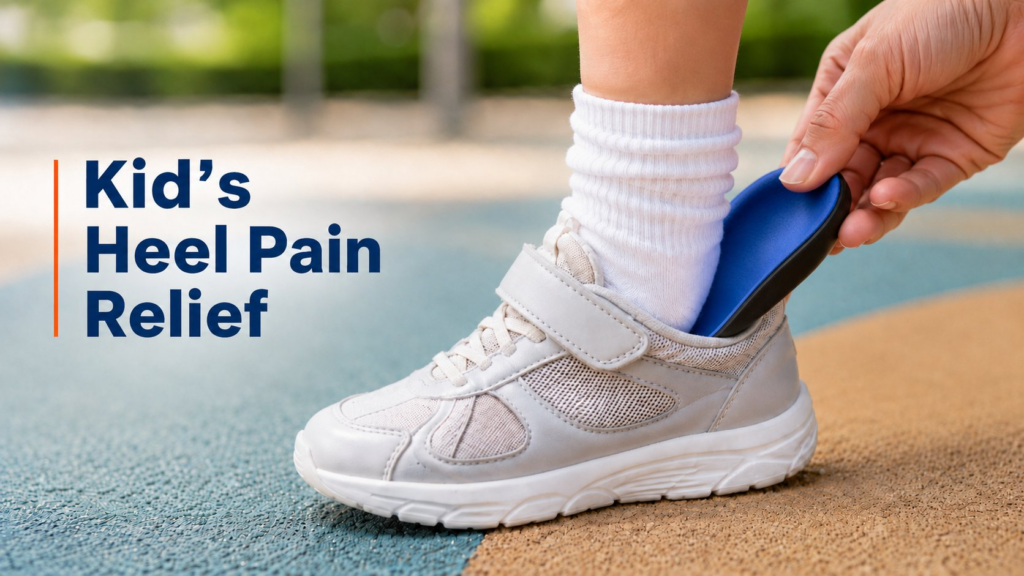
For many families, one of the first practical steps is trying heel cups or insoles for their child's heel pain. Inserts do not change the growth plate itself, but they may reduce impact, improve heel stability, and make activity more comfortable while the area settles down.
Ready to compare options? Shop insoles for Sever's disease to compare heel support, cushioning, shoe fit, and sizes for growing feet. If you want help deciding what type of insert makes sense, keep reading.
What Is Sever’s Disease?
Sever's disease is irritation of the heel growth plate from repeated stress during a growth phase. It is common in children who run, jump, cut, and play sports several times a week. A more clinical explanation can be found in the Review of Pediatric Heel Pain.
Parents usually notice a familiar pattern. Heel pain gets worse during or after activity, eases with rest, and then comes back at the next practice or game. If it keeps getting irritated, the pain can become noticeable even during everyday walking.
The discomfort is usually felt at the back and sides of the heel, around the calcaneal growth plate near the Achilles tendon attachment. Some children feel it in one heel, while others feel it in both. Running, jumping, and quick direction changes can keep irritating the area, especially if the calf is tight or the shoe has very little heel cushioning.
Parents comparing options can use the Sever's disease information page to connect the usual pattern of heel pain with insert features that fit a growing foot.
Can Shoe Inserts Help Children’s Heel Pain?
Certain inserts can help reduce discomfort for some children, particularly when heel pain follows the typical pattern of Sever’s disease. A shoe insert does not fix the growth plate itself, but it can make the heel more comfortable by reducing impact and improving how the heel sits inside the shoe.
That is why a deep heel cup matters in addition to a soft top layer alone. The right insert helps cradle the heel and keep the foot steadier inside the shoe, which may reduce impact and improve comfort during activity.
An insert may improve comfort and can provide additional support, but it is not the right first step for every heel complaint. If the pain is severe, constant, swollen, numb, worsening, or tied to a specific injury, get your pediatrician involved first.
Heel Cups vs. Full-Length Insoles
If you suspect an injury, a visit to the pediatrician may be in order, even if it is to sort out whether Sever's disease or another condition is causing the pain. If pain followed a specific injury, is unusually severe, or does not fit the typical activity-related pattern of Sever’s disease, a clinician can rule out other causes such as a calcaneal injury or fracture.
If the symptoms are consistent with Sever's disease and a clinician has not identified another cause, two common OTC options are heel cups and full-length insoles.
A heel cup cradles the heel pad and steadies the back of the foot. A full-length insole can do that too, while also distributing pressure more evenly across the arch and forefoot.
For a growing child, either heel cups or full-length insoles can both be reasonable OTC options. A heel cup helps cradle and cushion the heel and may reduce movement inside the shoe. A full-length insole can provide similar relief while also adding gentle support through the arch. Heel cups are often the least expensive option, but they can shift when putting shoes on. A full-length insole that fits the shoe well will usually stay in place more easily.
| Option | Best for | Main advantage | Watch for |
|---|---|---|---|
| Heel cup | Tight cleats, narrow shoes | Targeted heel cushioning with little added volume | Can shift when putting shoes on |
| Full-length OTC insole | Sneakers, running shoes, basketball shoes | Heel stability plus support across the foot | Needs enough shoe volume |
For athletic shoes with enough removable interior space, a full-length OTC insole is often the most convenient option because it stays positioned in the shoe and supports more than just the heel. For children who need a relatively thin full-length insert, the Superfeet All Purpose Insoles, formerly Superfeet Blue, comes in junior sizes and is a strong option to consider. Its slim profile works well in many lower-volume shoes, and its structured heel cup is designed to help position and stabilize the heel.
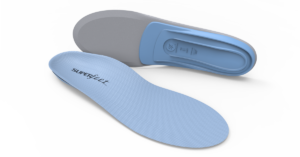
Shop Superfeet All-Purpose Support Medium Arch
What to Look for in an Insole for Sever’s Disease and Children’s Heel Pain
The best insert for a child with heel pain is not always the softest one on the shelf. Fit, shape, and shoe compatibility matter more than extra padding.
For sneakers, running shoes, and basketball shoes with enough interior space, a full-length insole is often a practical choice. It usually stays in place better than a separate heel cup and supports more of the foot.
Deep or structured heel cup
This can be a useful feature for children with heel pain. A deeper or more structured heel cup helps cradle the heel, center it in the shoe, and reduce movement around the irritated area. Even if the insole is firm, the heel cup can help position the heel’s natural fat pad under the sore area, which improves cushioning where it is needed most.
Low-profile fit
Children’s cleats, school shoes, and lower-volume sneakers usually do not leave much room inside. A heel cup or 3/4 insert is often easier to fit without making the shoe feel too tight. If a full-length insole is preferred, Currex CleatPro are designed specifically for cleats and are available in smaller sizes.
Appropriate arch support
A little arch support can help distribute pressure more evenly and improve overall foot stability. For most children, gentle support is usually better than something overly aggressive.
Correct size
The heel must sit fully inside the heel cup, and the insert needs to match both the child’s foot size and the interior shape of the shoe. As children grow, this should be checked regularly.
How to Fit Insoles in Kids’ Shoes
Even a quality insert will not help much if it sits incorrectly in the shoe. If you choose a full-length option, remove the factory liner first if it comes out easily. That creates room for the insert and helps the child’s foot sit at the proper height in the shoe.
The child’s heel should sit fully inside the heel cup, not rest on its edge. In growing kids, that heel cup fit is one of the most important details to check.
Check the fit in motion
Have the child stand up and walk a few steps. The heel should stay in place, and the forefoot should not press or bunch against the front of the shoe. If the insert is too long, it may curl at the toe and need trimming. If it is too thick, the shoe may feel tight before the child even starts moving.
Common fitting mistakes
A few mistakes come up again and again:
-
One shoe only: both shoes should have the insert so the gait stays balanced.
-
Too much trimming: cutting too far forward can move the support out of position.
-
Wrong volume: a thick orthotic in a shallow shoe often feels worse than a slimmer device.
-
Stacking inserts: do not place one insert on top of another inside the same shoe.
When a Child’s Heel Pain Needs Medical Attention
The fastest way to sort out heel pain is to ask three questions: Where does it hurt, when does it hurt, and what changed?
Pain at the back of the heel often points toward Sever’s disease. Pain under the heel may relate more to the soft tissue on the bottom of the foot, while pain on the side may suggest a different problem.
Heel pain that shows up during or after sport, then settles with rest, usually fits an overuse pattern more than constant pain does. If the pain began after new cleats, a big jump in training, or a growth spurt, that is also worth noting.
Get a clinician involved if pain is severe, constant, associated with significant swelling or numbness, follows a specific injury, or continues to worsen despite activity modification and basic home care. Those signs deserve an exam before you keep experimenting with footwear.
How Long Should Children Wear the Inserts?
Children usually wear heel cups or insoles as long as they are helping and the heel is still prone to flaring up with activity. The goal is not to wear them forever. The goal is to keep the child comfortable and active while growth catches up and the heel settles down.
Success is often practical, not dramatic. The child may finish practice without limping, complain less after recess, or recover more quickly after activity. Some children notice relief quickly, while others improve more gradually.
An insert is not a cure, and it does not rebuild the heel growth plate. Some children still need rest from harder drills, calf stretching, or a clinician’s guidance if the pain keeps coming back.
Insole Care and When to Replace
For care, let inserts air dry overnight, especially after sweaty practices, and rotate between two pairs if the same shoes get worn every day. For basic maintenance tips, the insole care guide is a useful reference when you want to keep the fit consistent.
Replace the insert when these signs show up:
-
Visible compression: the heel area feels flat or packed down.
-
Cracked foam: the support material is breaking apart.
-
Outgrown sizing: the child’s foot now hangs over the device or shifts inside it.
-
Pain returns: the heel was calmer, then starts flaring again after a pain-free stretch.
Quick Q&A
Do insoles help with Sever’s disease?
They may help reduce discomfort by cushioning and stabilizing the heel, but they do not change or heal the growth plate itself.
Are heel cups or full-length insoles better for Sever’s disease?
Both can be reasonable options. Heel cups generally take up less space, while full-length insoles can provide heel cushioning plus support across more of the foot.
What type of insole is best for kids with Sever’s disease?
Look for an insert that fits the child’s shoe properly and provides appropriate heel cushioning, a structured heel cup, and comfortable support without making the shoe too tight.
Ready to find the right fit? Shop our insoles for Sever’s Disease to compare heel support, insole depth, and sizes for growing feet. Looking for the full-length option discussed above? Shop Superfeet All-Purpose Support Medium Arch.