You finish a match, sit down to untie your shoes, and your feet tell you exactly how the last hour went. Maybe it’s a hot, sore forefoot from repeated split steps. Maybe it’s a sharp pull under the heel when you stand up. Maybe your arches just feel spent.
That’s usually the point where players start thinking about insoles. Not as an accessory, but as equipment. In the best pickleball insoles reviewed in 2026, the difference isn’t just softness. It’s whether the insert controls side-to-side movement, keeps the heel centered, and supports the arch without making the shoe unstable.
Why Your Feet Hurt After Pickleball and How Insoles Help
Pickleball punishes feet in ways many players underestimate. The game looks compact, but the footwork isn’t gentle. You plant, cut laterally, stop hard, shuffle again, and lunge forward with very little recovery time between movements. A shoe’s generic stock liner isn’t built for that pattern.
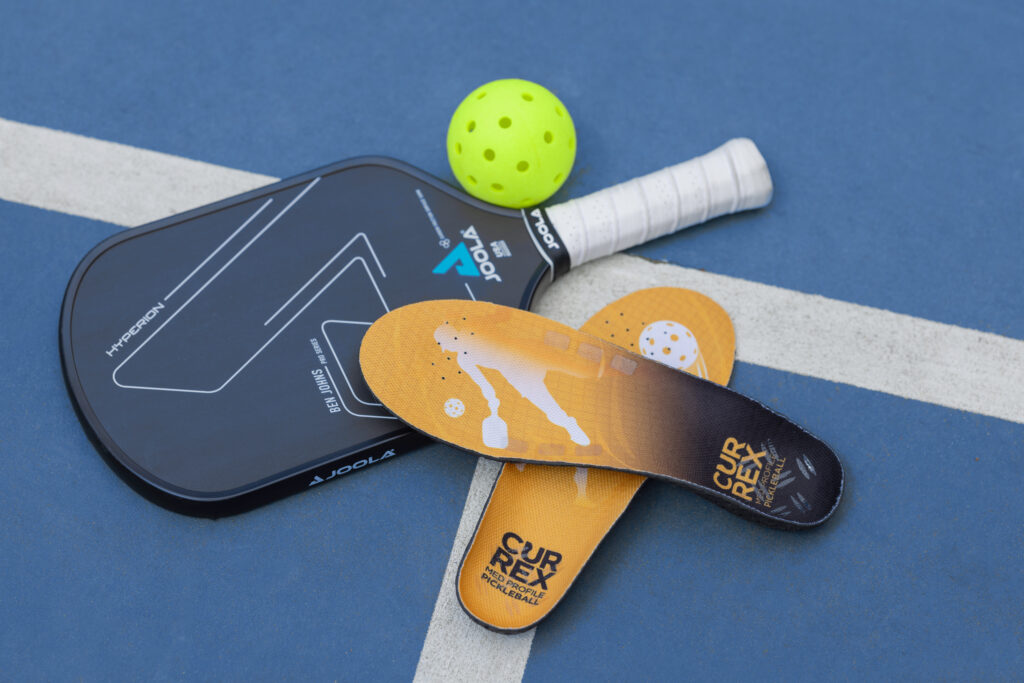
That’s one reason demand for sport-specific inserts has risen with the sport itself. CURREX PICKLEBALLPRO™ was named the official insole of Major League Pickleball, and the sport grew from 4.8 million U.S. players in 2022 to over 36 million globally in 2026. That matters because pickleball-specific insoles are being designed around the movement pattern that causes trouble: repeated lateral motion and abrupt stopping.
What’s usually happening inside the shoe
A lot of post-match pain comes from one of three problems:
-
Heel instability that lets the rearfoot slide or tilt during lateral cuts
-
Poor arch contact that leaves the plantar fascia doing more stabilizing work than it should
-
Forefoot overload when quick stops drive pressure into the ball of the foot
If your foot moves on top of the insole, or if the arch support hits the wrong place, the shoe can feel cushioned but still leave you tired and sore.
Good pickleball insoles don’t just soften impact. They help the foot stabilize inside the shoe.
Where insoles fit into recovery
Insoles won’t solve every problem. Tight calves, limited ankle motion, and overloaded lower legs still matter. For players who are already dealing with persistent soreness after court time, hands-on recovery work like massage therapy can be a useful complement to better footwear support.
The main point is simple. If your feet hurt after pickleball, the answer usually isn’t “more padding.” It’s better foot control.
The Best Pickleball Insoles of 2026 at a Glance
Some players need a quick shortlist before they dive into details. These are the models I’d separate first based on how they solve pickleball-specific problems, not just how soft they feel in hand.
2026 Top Pickleball Insoles Comparison
| Insole Model | Best For | Arch Support | Cushioning | Thickness | Key Feature |
|---|---|---|---|---|---|
| SUPERFEET High Impact | Explosive players who want rebound and rigidity | Firm | Moderate | Max | Regular insole option and women’s specific option |
| FORM Ultra-Thin | Players who need highly adjustable support | Dynamic; will form over time to lower heights | Moderate | Thin | Custom forming to your specific arch height |
| 10 SECONDS Arch Stability | Players who want arch stability with cushioning | Firm | Max | Medium | Structured arch support with extra cushion |
| CURREX PickleballPro™ | Players focused on pickleball-specific fit and lateral movement support | Low Arch, Medium Arch, and High Arch options | Moderate | Thin | Pickleball-specific design for side-to-side court movement |
For a broader shopping view of activity-specific models, the pickleball insole collection at Insoles.com is a practical place to compare shapes and support styles.
Fast matching guide
If you want the shortest possible answer, start here:
-
Need the most propulsion and a firmer ride: Superfeet All Purpose High Impact Insoles and Superfeet Women’s All Purpose High Impact Insoles
-
Need the most tuning for arch height and foot position: FORM Ultra-Thin Heat-Moldable Insoles
-
Need dependable support without an overly technical setup: 10 Seconds Arch Stability Insoles
-
Need a dynamic pickleball-focused option: Currex PickleballPro Low™, Currex PickleballPro Medium™, or Currex PickleballPro High™
The best model depends on how your foot behaves when you cut, brake, and push off.
Our Evaluation Criteria for Pickleball Insoles
Two insoles can look similar on a product page and feel very different on court. Key separating factors are heel cup shape, torsional control, how the arch meets your foot, and whether the heel and the forefoot stays stable during quick stops.
A running insole can work for straight-line mileage and still fail badly in pickleball. Court play asks the insert to do something different. It has to support weight shifts that happen sideways, not just heel-to-toe.
For readers who want a broader fit primer, our Insoles.com guide on choosing the right insole is useful. My screening framework for pickleball is narrower and more specific.
Arch support that works during lateral movement
The first question isn’t “does it have arch support?” It’s “does the arch support stay useful when you move sideways?” A pickleball insole needs to contact the arch without jamming it. If the support is too low, the foot collapses onto it late and inefficiently. If it’s too aggressive, the foot perches on top of the insert and gets unstable.
What works best is support that guides the midfoot during a shuffle or lunge without creating a pressure point under the navicular area.
Heel cup depth and rearfoot control
The heel should sit in the insole, not on it. A shallow heel cup often feels fine when you’re standing still. It shows its weakness during a hard plant to the side. That’s when the rearfoot can slide, tilt, or twist, and the ankle has to clean up the mess.
I look for a heel cup that does three things:
-
Centers the calcaneus (the heel bone): keeps the heel from drifting inside the shoe
-
Reduces edge rollover: helps when you plant hard on one side
-
Improves fit with the upper: makes the whole shoe feel more connected to the foot
Practical rule: if your heel feels like it’s floating during a lateral stop, the insert is too flat, too soft, or too generic for the job.
Forefoot cushioning that doesn’t get mushy
Pickleball creates repeated forefoot loading. Split steps, quick toe-off, and braking into the kitchen all drive pressure forward. The right insole should soften that force without turning the front of the shoe into foam soup.
I’d rather see controlled cushioning than maximal cushioning. Too much softness under the metatarsal heads can make push-off feel slower and less stable.
Torsional rigidity and platform stability
This matters more than most players realize. Torsional rigidity is the insole’s resistance to twisting in the arch plate. For pickleball, some rigidity is helpful because it keeps the insert from wringing out under side-to-side loads.
That doesn’t mean every player needs a rigid carbon plate. It means the insole should hold its shape when the shoe is stressed laterally.
Surface grip and in-shoe security
The final screen is simple. Does the foot stay put? If socks slide over the top cover, or if the insert shifts on the strobel board, the rest of the design matters less.
The best pickleball insoles reviewed in 2026 consistently solved this. The weak ones felt decent while walking, then failed the first time the player braked hard and changed direction.
In-Depth Reviews of 2026’s Top-Rated Models
A common match-day complaint goes like this. The shoe feels fine in warm-up, then the foot starts sliding on hard lateral stops, the forefoot gets sore by game three, and the heel feels beat up driving home. That is why the right insoles can make all the difference in your game.
Superfeet All-Purpose High Impact Support Insoles

Superfeet High Impact Insoles suit the player who wants a firmer, more propulsive ride. These insoles cup the heel to provide stability provide a rigid support where it counts along with firm cushioning in the forefoot for shock absorption. These insoles come in multiple options, the regular Superfeet All-Purpose High Impact Insole and the women’s specific All-Purpose High Impact Women’s Insole. (Women frequently have a narrower heel than men and the women’s specific insoles are designed to accomodate this issue.)
Sometimes people note that Superfeet insoles feel like the arch support is “too far back.” However, this support placement is deliberate by design and helps to stabilize the heel and lock in the arch. On the court, these high-impact insoles usually translate to a stiffer underfoot feel with more rebound than a foam-based insert. I see the best fit here with players who attack the ball, load the forefoot hard, and prefer a responsive platform over plush comfort. The plate can also help the shoe feel more consistent during repeated cuts because the insole resists folding under load.
Superfeet fits the player who wants the insole to change the ride of the shoe, not just add cushion.
Where it shines
-
Softer toe-off: the firm cushion absorbs the shock of a quick push-off
-
Stable platform: firm construction holds shape well during lateral loading
-
Works for players who dislike soft inserts: court feel stays direct
Trade-off
- The firmness can feel excessive if your main goal is casual comfort or pressure relief under sensitive feet.
FORM Ultra-Thin Heat-Moldable Insoles

FORM Ultra-Thin Insoles are the most customizable option here. These insoles are heat-moldable and are designed to form to your specific arch height. The ultra-thin version of the Form insoles is a great fit for pickleball shoes, customizing the arch profile for a perfect fit.
A huge benefit of these insoles is how thin they are. Pickleball shoes are often tight-fitting court shoes. Removing the stock liners and replacing them with arch support insoles can cause them to become too tight at times. With the Form Ultra-Thin insoles you get the benefit of keeping room in your pickleball shoes.
Best fit
-
Players with hard-to-fit arches
-
Tight pickleball shoes that don’t have alot of room for an added arch support
-
Athletes wanting a more custom fit
Trade-off
- Molding takes a little time; molding in the oven is faster than molding by wear
10 Seconds Arch Stability Insoles

10 Seconds Arch Stability Insoles are support-first options for players who overpronate and need the insole to hold shape through repeated sessions. This insole is designed to stabilize and support the foot with a heel cradle and anatomically shaped arch.
I would point a player here when the main complaint is heel pain, arch fatigue, or a stock liner that goes flat after a few weeks. The ride with this insole is controlled and stable, with excellent support and a little more spring than the other pickleball insoles.
Best fit
-
Players with plantar heel pain or tired arches
-
Players who are over-pronators but still want cushioned support
-
Anyone who wants a more planted, support-first feel
Trade-off
- A little bit thicker than other pickleball insoles
CURREX PickleballPro™

CURREX gets attention because it was built around dyanamic pickleball movement, as noted earlier in the article. These pickleball specific insoles come in the Currex Pickleball Low Arch, Medium Arch or High Arch. The practical benefit is straightforward. It tends to work well for players who want better in-shoe control during cuts, pivots, and quick transitions without stepping into a very rigid design.
From a pedorthic standpoint, this is often a good middle-ground choice. This insole is much more sport-specific than a generic athletic insert, but it does not feel as aggressive as a plated model. The actual support on these is dynamic instead of rigid so you still get some natural arch movement that is gently supported. Because of the different arch height designs, these insoles often feel like a custom fit, transforming the pickleball shoe into a perfect ride.
Best fit
-
Players who have tired arches that want arch-height specific insoles
-
Those who want a court-oriented insole designed for lateral movement
-
Players who prefer dynamic support over a hard, rigid platform
Trade-off
- Severe overpronators may need a more structured support
Choosing the Right Insole for Your Foot Type and Condition
A great insole can still be the wrong insole for your foot. Most bad matches happen because the player chose based on hype, not mechanics.
If you have flat feet or overpronate
Look for structure first, cushion second. Flat feet often need an insole that resists collapse during side-to-side loading and front to back movement. A flexible foam insert won’t do enough once the pace picks up.
10 Seconds Arch Stability and Superfeet All Purpose High Impact Insoles are both strong here because of their rigid arch support. The key is a stable arch platform and a heel cup that keeps the rearfoot centered.
If you have high arches
High-arched players often need contact, not just firmness. The arch should meet the foot well enough to spread load, but not feel like a hard lump under the midfoot.
CURREX Pickleball High Insoles and FORM Ultra-Thin insoles both make sense for this group because you can fine-tune arch height.
How to Fit, Test, and Replace Your Insoles
Even the best insole fails if it’s fitted badly. I see this all the time. A player buys a strong model, drops it on top of the stock liner, crowds the shoe, and then blames the insert.
How to fit them correctly
Start with the basics:
-
Remove the factory liner first. Most pickleball shoes don’t have enough volume for stacking two full-length insoles.
-
Match heel to heel when sizing. If trimming is needed, trim the forefoot gradually.
-
Check arch placement before you lace up hard. The support should meet your arch, not sit too far forward.
-
Stand, then shuffle. Don’t judge fit only while seated.
A proper fit feels secure, not dramatic. You should notice better contact and control, not uncomfortable pressure spikes.
How to test them before full play
Use a simple progression:
-
Walk indoors first: look for heel lift, bunching, or arch irritation
-
Do lateral shuffles: this reveals poor lock-in faster than walking does
-
Try split steps and short stops: the forefoot should feel stable, not mushy
-
Play a short session before a long one: supportive insoles sometimes need a brief break-in period
If an insole feels unstable in a hallway shuffle, it won’t improve during a fast kitchen exchange.
When to replace them
Generic advice falls short. Many brands claim a 6-8 month lifespan, but pickleball-specific wear data is limited. It will very much depend on how often and how long you play. It will also depend on the insole materials, as more rigid insoles will generally last longer than dynamic ones.
So don’t replace by calendar alone. Replace when you notice:
-
Forefoot compression: the front feels flat or dead during stops
-
Heel cup breakdown: the rearfoot starts drifting more
-
Visible edge wear: especially on the side that takes your lateral load
-
Return of familiar symptoms: heel pain, arch fatigue, or hot spots you had already solved
For frequent players, wear signs matter more than the month printed in a rule of thumb. As you get used to your insoles you will be able to determine how many months of wear you will get out of each pair.
Frequently Asked Questions About Pickleball Insoles
Can I use running insoles for pickleball
Sometimes but not always. If the insoles have a good heel cradle then they will generally work for both running and pickleball. Also keep in mind that pickleball asks more from lateral support, heel containment, and resistance to twisting under side-to-side load.
Should I remove the liner that came with my shoes
Yes, usually. Most full-length aftermarket insoles are designed to replace the factory liner, not stack on top of it. If you leave the stock liner in, the shoe often gets too tight and less stable. If the factory liner is not removable then make sure to choose a very thin insole to place on top of it.
How long is the break-in period
It depends on how supportive the model is and how different it is from what you’ve been wearing. A firmer insert may need a few shorter sessions before it feels natural. Mild awareness under the arch is normal. Sharp pressure or numbness is not.
What matters more, cushioning or arch support
For pickleball, support usually matters more. Cushioning helps, especially in the forefoot, but too much softness can make the foot unstable. Controlled support plus targeted cushioning is the better combination.
What’s the biggest fitting mistake
Choosing the insole by brand reputation instead of foot mechanics. The best pickleball insoles reviewed in 2026 are all capable products. The right one is the one that matches your arch shape, heel control needs, and playing style.
Can I wear any shoes as long as I have an insole
No, you must remember that your shoes are the most important aspect of protecting your feet in your pickleball game. Don’t neglect your shoes. Wear shoes that are specific for the court because these will be designed for front to back and also lateral side to side movement. The insoles are designed to upgrade your shoes, not fix a shoes that is not designed for the game.
If your feet are sore after pickleball, don’t settle for the stock liner in your shoes. Shop Insoles.com to compare sport-specific insoles by arch type, foot condition, and activity, and get the right support for better comfort, cleaner movement, and longer time on court.