
If you’re a runner with high arches, you know that the inserts that come with your running shoes just don't cut it. To avoid pain and injury, you need firm support and deep cushioning designed to fill the gap under your arch, spread the pressure out, and absorb the shock your foot can’t. Stop letting inadequate support hold you back. Find the perfect insoles for your high arches and purchase your pair today.
The Hidden Challenge of Running with High Arches
Running with high arches (a condition called pes cavus) is a lot like driving a car with a bad suspension. Every bump in the road sends a jolt right through the frame. Similarly, a high-arched foot is often rigid and doesn't flatten to absorb the impact of each stride. Instead, that jarring force travels straight up your legs and back.
This rigid structure means your arch doesn’t do its job of naturally cushioning your step. All that pressure gets focused on just two spots: the heel and the ball of your foot. When you multiply that by thousands of steps over a run, it’s a recipe for injuries that can sideline even the most committed runners.
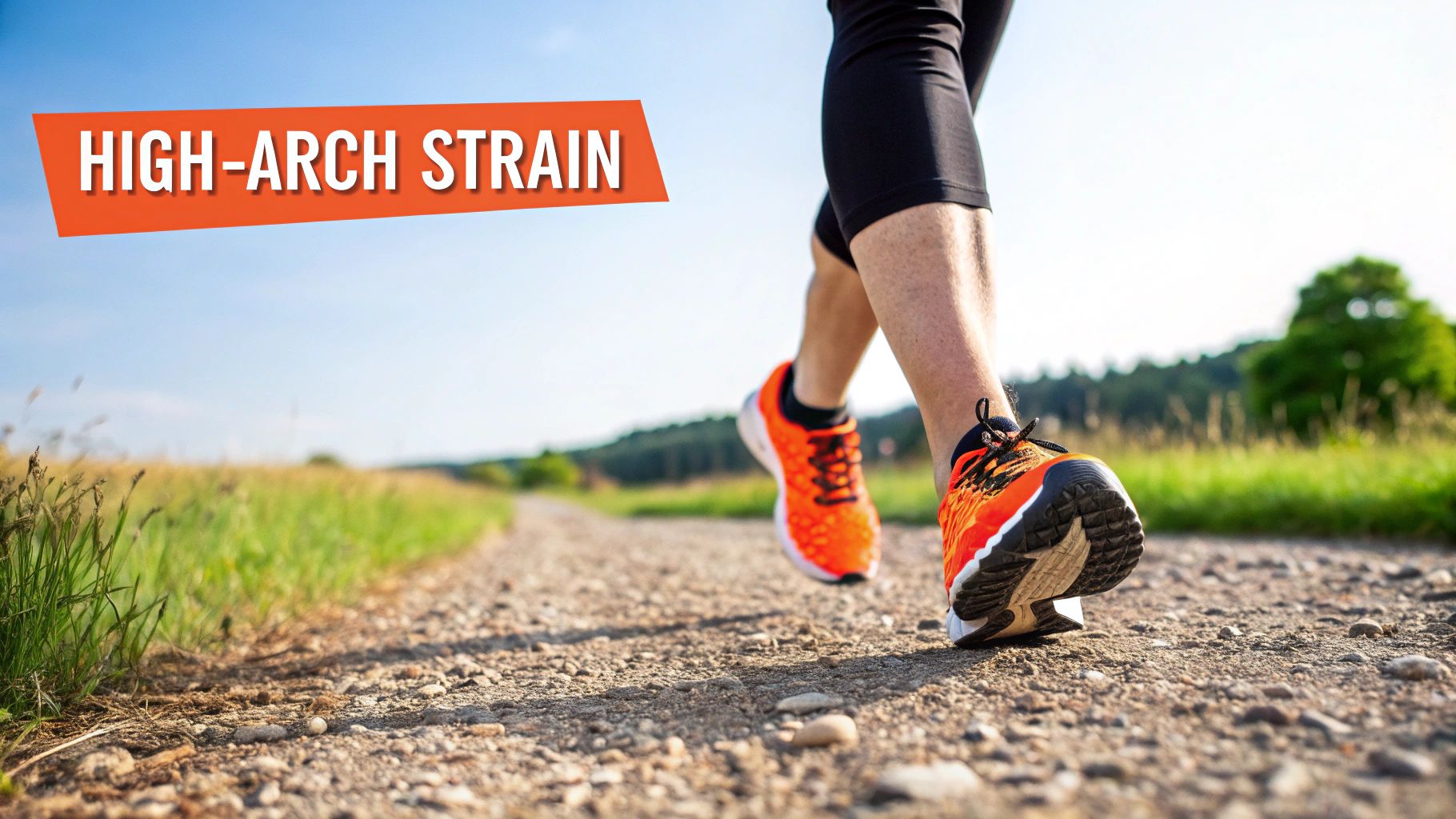
Why High Arches Demand Better Support
Let’s be honest: the flimsy foam liners that come in most running shoes offer almost zero structural support. They can’t possibly fill the significant gap between your high arch and the footbed of your shoe. And that’s where the trouble starts.
Without something solid filling that void, your foot is much more likely to roll outward when you land. This movement is called supination, and it’s incredibly common for runners with high arches. It's also a direct cause of several painful conditions. If this sounds familiar, you might want to take a deeper look into the specific symptoms and conditions associated with high arches.
Because of poor shock absorption and that tendency to supinate, runners with high arches often end up with:
-
Plantar Fasciitis: That stabbing heel pain from the plantar fascia ligament being stretched way too tight.
-
Shin Splints: Aching along the shin bone because your lower leg muscles are working overtime to stabilize your foot.
-
Stress Fractures: Tiny cracks in the bones of your feet and lower legs from all that repetitive, unabsorbed impact.
-
Ankle Sprains: A much higher risk of rolling your ankle because your foot is already tends to tilt outward.
A significant concern with having a high arch is its reduced capacity to absorb shock effectively. An appropriate insole can address this challenge. It ensures complete contact with the foot and offers cushioning beneath the arch. This support enhances the foot's stability, improving weight distribution during high-impact activities.
For a runner with high arches, a specialized insole isn't a luxury—it's essential equipment. It’s what you need to prevent injury and unlock a more comfortable, powerful run. Browse our curated selection of high-arch insoles and purchase the support you need to run pain-free.
Top 5 Insoles for High Arches
Best for Cushion: Prothotic Ultra Arch
Best for Metatarsal Support: Ten Seconds Ultra Arch
Best for Thin Arch Support: Currex RunPro High
Best for Custom Fit: Form Maximum Support Insoles
Best for Heel Stabilization: Superfeet Green Insoles
Key Insole Features That Support High Arches
Picking the right running insole when you have high arches is a lot like building a custom suspension system for a car. Every single component has a critical job. If one part fails, the whole ride feels off. When your foot's natural anatomy doesn't absorb shock very well, the insole has to pick up the slack.
Let's walk through the absolute must-have features that make an insole work for a high-arched runner. These aren't just marketing terms; they're the architectural pieces that shield your feet from the constant pounding of the pavement. Once you know what they do, you'll be able to spot an insole that's actually up to the task.
Deep Heel Cups for Unshakeable Stability
Think of a deep heel cup as a bucket seat for your heel. The flimsy liner in your running shoe is flat, letting your heel slide around with every step. A deep, structured heel cup, on the other hand, cradles the fatty pad right under your heel bone. This is your first and best defense against supination, that outward rolling motion so common in runners with high arches.
By locking your heel down, a deep heel cup does two big things:
-
It aligns your foot properly from the second it hits the ground, promoting a much more stable stride.
-
It maximizes your body’s own cushioning by keeping that fatty pad concentrated directly under the heel bone, right where you need it.
This stability is the foundation for everything else.
Arch Support to Bridge the Gap
If you have a high arch, there’s a major gap between the arch of your foot and the flat bottom of your shoe. A firm, structured arch support is built to fill that void. It works like a support pillar under a bridge, suppporting your arch under the massive force of your body weight when you run.
"Firm" doesn't mean it should feel like a rock, especially when it comes to a high arch. High arches will find the most comfort with a semi-rigid or cushioned support, giving you a solid structure that still has a bit of forgiving flex. It should feel like it's rising up to meet and hold your arch, distributing pressure evenly and taking the load off your heel and forefoot.
Metatarsal Padding for Forefoot Relief
Runners with high arches often get that nagging pain in the ball of the foot, right behind the toes. This area is called the metatarsals. Because a rigid, high arch doesn't flatten out to help absorb impact, the forefoot ends up taking a huge amount of punishment with every stride.
A metatarsal pad is a small, dome-shaped cushion built into the insole that sits just behind the ball of your foot. It’s a simple feature with two powerful benefits:
-
It lifts and gently spreads the metatarsal bones, relieving the intense, focused pressure on that small area.
-
It can help prevent nerve-related pain, like Morton's neuroma, which is a frequent complaint for people with high arches.
The correct positioning of the metatarsal pad within an insole is crucial for comfort and effectiveness. The pad should be placed just behind the ball of the foot, rather than directly underneath the bony metatarsal heads situated in the ball of the foot region. This placement alleviates pressure from the metatarsal heads, helping to distribute weight more evenly across the foot and reduce discomfort during movement.
Targeted Cushioning to Absorb the Shock
When discussing cushioning, it's important to note that while the firm arch element provides structural integrity, cushioning is essential for comfort and protection. Individuals with high arches often experience inadequate shock absorption, so the insole must compensate for this deficiency. It's more than just adding a soft foam layer.
Top-quality insoles designed for high arches in running activities incorporate advanced materials strategically placed in high-impact areas. For instance, insoles featuring gel pads in the heel or midsoles made from durable EVA foam can significantly reduce stress on the feet.
Selecting an insole that integrates these components— a deep heel cup, firm yet cushioned arch support, and a metatarsal pad—can effectively address the difficulties associated with running with high arches. Stop enduring pain and instability. Provide your feet with the advanced support they need. Invest in the ideal pair of running insoles to ensure long-term benefits for your running health.
Choosing the Right Insole Material and Type
Knowing the key features of an insole is a great start, but the materials are what really shape your running experience. The right insole for high arches running depends heavily on its construction, which dictates comfort, shock absorption, durability, and even its weight. Think of it like picking tires for a car—what you use for a daily commute isn't what you'd put on for a racetrack.
Let's walk through the most common materials you’ll find. Each one brings something different to the table, and matching the material to your running style is the secret to unlocking better performance and keeping pain at bay.
A Runner’s Guide to Insole Materials
The world of insole materials can feel a bit overwhelming, but most options fall into a few key categories. From soft foams that cushion every single landing to rigid plates that provide unyielding support, there's a material built for every kind of runner.
-
EVA (Ethylene Vinyl Acetate) Foam: Consider EVA foam the workhorse of the running world. It's lightweight, affordable, and fantastic at absorbing shock. A plush EVA foam insole feels forgiving underfoot, making it an excellent pick for daily training and recovery runs where comfort is king. One of the best EVA options is the Powerstep Pinnacle Insole.
-
Memory Foam: While great for standing or walking, traditional memory foam is often too soft for running. It compresses under the repeated impacts of running, losing support when you need it. However, it does add cushioning and comfort, which some runners prefer, though it needs more frequent replacement than other insoles. If you opt for a memory foam insole, choose one made from high-quality materials like the Form Memory Foam Insole.
-
Cork: Cork is a wonderful natural material that offers a unique mix of firmness and personalization. It gives you solid, semi-rigid support right out of the box but gradually molds to the specific shape of your foot over time. The result? A customized fit that’s uniquely yours. Best option with cork: Birkenstock 3/4 Sport Insole
-
Carbon Fiber: For runners who are all about speed and performance, carbon fiber is the top-tier choice. It’s incredibly lightweight yet exceptionally rigid, providing maximum energy return. Instead of just soaking up impact, it helps propel you forward with every stride, making it perfect for race day. An excellent carbon fiber, cushioned combo for high arches is the 10 Seconds Ultra Arch.
The diagram below breaks down the three pillars of an effective insole. Keep in mind that the material you choose is what brings these pillars to life.
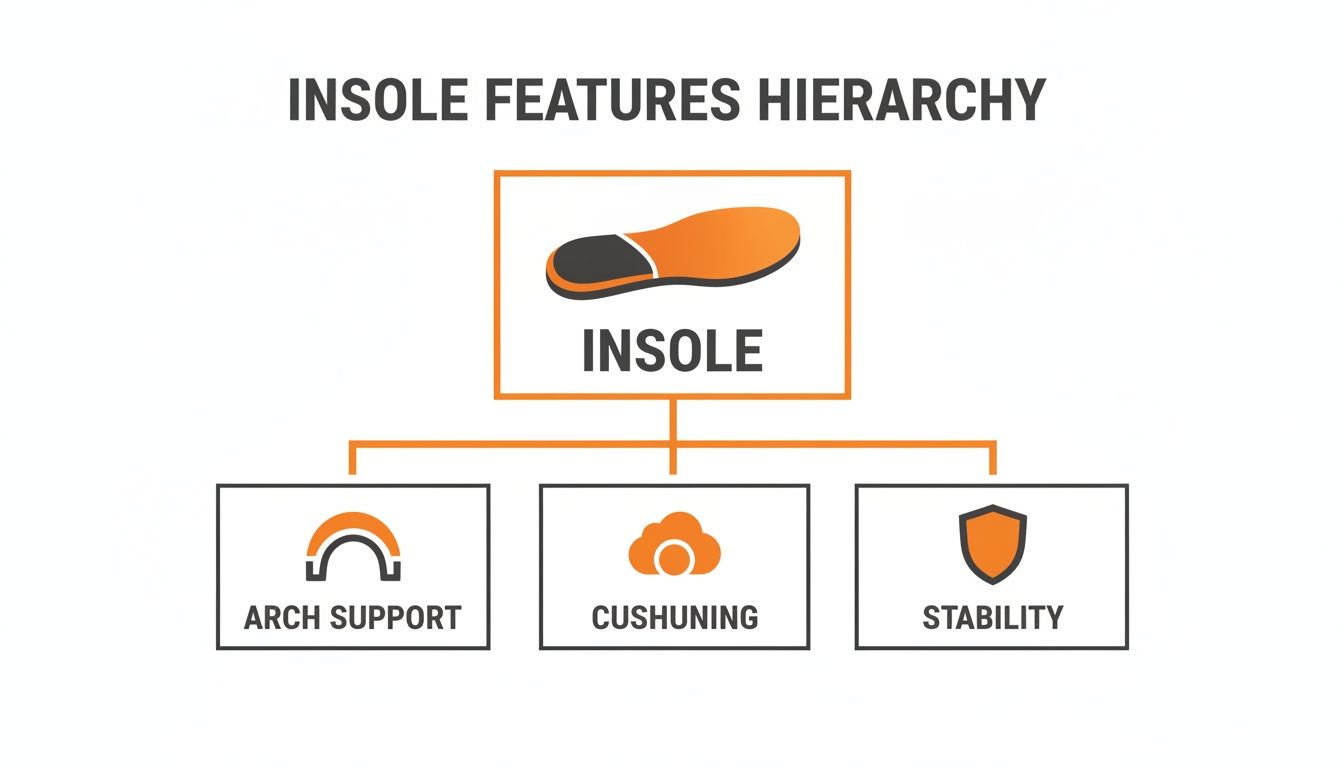
This shows how a great insole creates a complete support system for your foot by balancing arch support, cushioning, and stability.
How to Ensure Your Insoles Fit Perfectly
Even the best insoles for high arches running won't do you any good if they don't fit correctly inside your shoe. A poor fit is a recipe for disaster—it can create painful pressure points, cause blisters, or just fail to deliver the support you were promised. Getting the fit right is the key to unlocking all the comfort and performance benefits you’re looking for. For more detailed advice on sizing, check out our complete insole size guide.
A proper fit isn't just about size—it's about the volume the insole occupies. High-volume insoles are thick and offer maximum cushioning, but they can make a sleek, low-profile running shoe feel painfully tight. Always match the insole's volume to your shoe's interior space to avoid a cramped toe box.
Trimming for a Flawless Shape
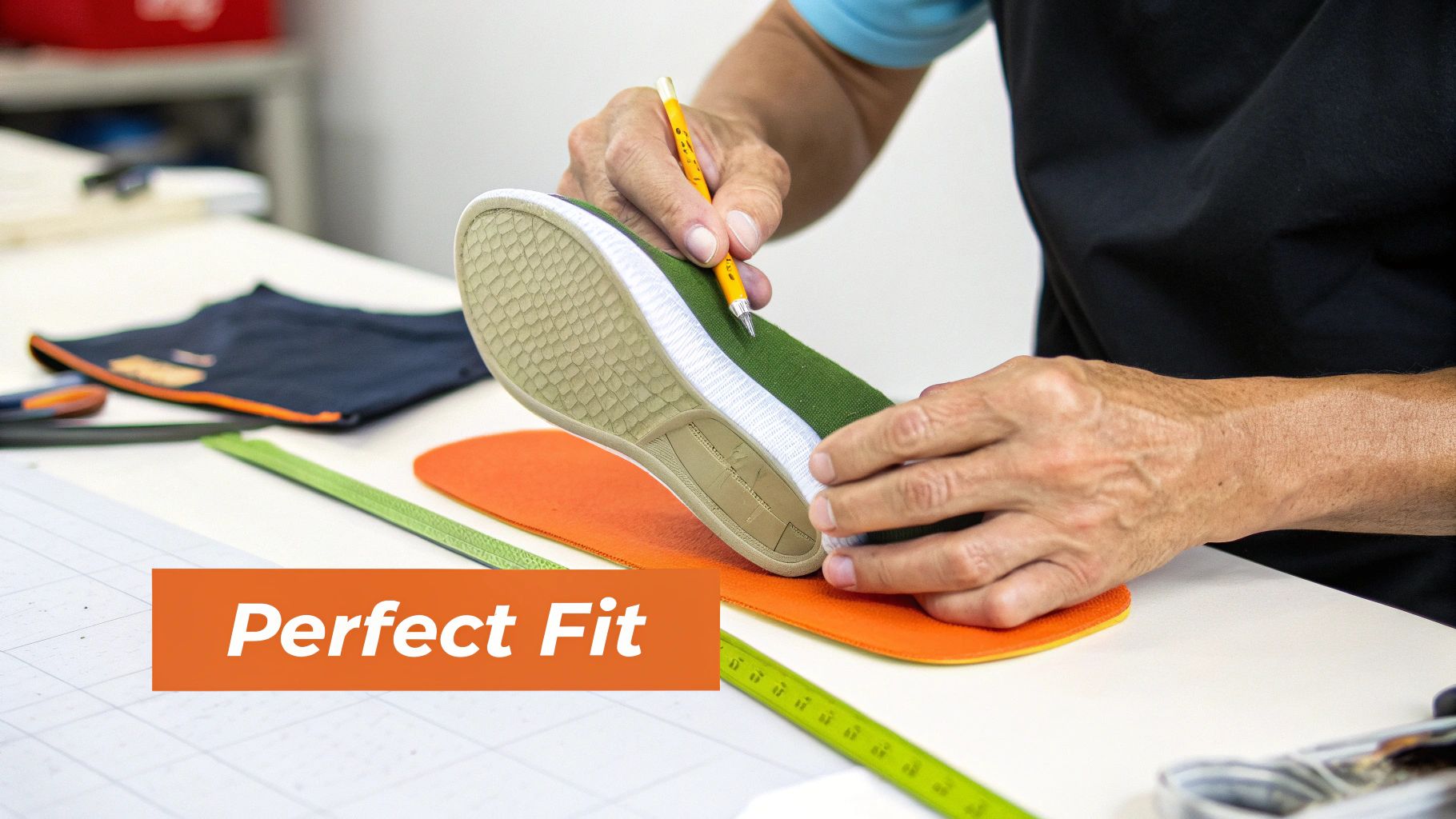
Most quality insoles are designed to be trimmed down for a custom fit. The best template you have is the original factory liner that came with your shoe.
Here’s how to do it in a few simple steps:
-
Remove Both: Pull the original, flimsy liner out of the running shoe you’ll be using. Take your new insole out of its packaging, too.
-
Create Your Guide: Lay the factory liner directly on top of your new insole. The most important part is to make sure the heels are perfectly aligned and flush with each other.
-
Trace the Outline: Grab a pen or marker and carefully trace the toe and forefoot shape of the original liner onto your new insole.
-
Trim Carefully: Using a sharp pair of scissors, cut along the line you just drew. A good pro tip is to cut slightly outside the line at first. You can always trim off a little more, but you can't add it back!
-
Test the Fit: Slide the freshly trimmed insole into your running shoe. It should lie completely flat without any bunching at the toes or curling up along the sides.
Taking these few extra minutes to dial in the fit makes all the difference. When your insoles are trimmed just right and your feet have adapted, you can run with total confidence, knowing your support system is working exactly as it should.
The Crucial Break-In Period
Your feet, especially if you have high, rigid arches, need some time to get used to the new sensation of proper support. It can be a real shock to the system to go straight into a long run with them. Easing into it is essential.
Start by just wearing them for a short walk or around the house for an hour or two. Over the next few days, gradually increase how long you wear them before you head out for your first run. This adaptation period lets the muscles and ligaments in your feet adjust to their new alignment, helping you avoid any initial discomfort. Once your insoles are comfortable around the house, it's time to take them out for a run! Once you're confident in the fit, it's time to purchase a backup pair for your other shoes.
Troubleshooting Common Fit Issues
Once you start putting miles on them, you might run into a few minor issues. The good news is that most have simple fixes.
-
Squeaking: This is almost always caused by friction between the insole and the shoe's interior. Just pull the insole out and sprinkle a little baby powder or talcum powder inside the shoe. Problem solved.
-
Heel Slippage: If your heel keeps lifting out of the shoe, the insole might be a bit too thick. You could try using a "runner's knot" lacing technique to lock your heel down more securely.
Top Recommended Insoles for High Arch Runners
Navigating the world of running insoles can feel like a marathon in itself. But trust me, finding the right pair is a massive step toward logging pain-free miles. Now that you know what to look for, let's talk about some of the top-tier brands that high-arched runners swear by. These aren't just random picks; they're proven solutions from companies, doctors, and pysical therapists that have poured years into perfecting foot biomechanics.
Superfeet: Legendary Stabilizing Shape
When runners talk about reliable, no-nonsense support, the name Superfeet almost always comes up. Their whole philosophy is built around a signature stabilizing shape designed to cradle the heel and give your rearfoot a solid foundation. For a high-arched runner who tends to supinate (roll outward), this kind of stability is an absolute game-changer.
The Superfeet High Arch All-Purpose Insole, previously known as Superfeet Green, is a well-established and widely favored choice among users.
Think of the Superfeet shape like a firm, supportive platform that helps your foot work more efficiently. It’s all about controlling that excessive side-to-side motion and keeping your foot in a more neutral alignment, right from the moment you strike the ground.
-
Deep, Structured Heel Cup: This is the heart of the Superfeet design. It locks your heel in place, which helps your body maximize its own natural shock absorption.
-
High-Profile Arch Support: The firm, high shape is specifically engineered to meet your high arch, preventing it from collapsing under the stress of running and spreading the pressure out evenly.
This structured approach makes Superfeet a fantastic choice for any runner needing dependable control to fight instability and reduce strain on their joints.
Currex: Dynamic Flexible Support
On the other side of the coin is Currex, a brand that's become famous for its dynamic, flexible insoles. Where Superfeet focuses on firm stabilization, Currex designs its insoles to move with your foot, giving you support without restricting its natural motion. Their insoles are often lighter and less rigid, which really appeals to runners who want support that feels less intrusive.
Currex's philosophy is more about enhancing your foot's natural function than trying to correct it. They offer different arch profiles (High, Medium, and Low) so you can get a fit that truly matches your foot's unique anatomy. This makes them a favorite for runners looking for that sweet spot between cushioning, flexibility, and personalized support. The preferred choice for high arch runners is the Currex RunPro High.
The key takeaway here is that there's no single "best" brand for everyone. Your choice between a firm, stabilizing insole like Superfeet and a dynamic, flexible one like Currex really comes down to your unique biomechanics and what feels right to you.
Find Your Perfect Match with the Insole Advisor
Feeling a bit overwhelmed by the options? We get it. That's why we created our Insole Advisor tool. It acts like your personal fitting expert, cutting through the noise to give you a personalized recommendation in minutes.
By answering a few simple questions about your shoe type, size, and activity, you can skip the guesswork and get straight to the best options for your feet.
Don't let foot pain sideline you for another run. Your perfect pair of insoles is out there waiting. Get your personalized recommendation by using our Insole Advisor and feel the difference that proper support makes from your very first step.
Putting It All Together for a Pain-Free Run
Let's tie this all together. At this point, you've got a solid grasp of how your high arches work and why the flimsy liners that come with your running shoes just don't cut it. You know exactly what to look for in an insole, how to pick the right materials for your running style, and how to get that perfect fit inside your favorite shoes. This is your new foundation for a stronger, healthier running life.
Deciding to invest in the right running insoles for high arches is one of the smartest, most proactive moves you can make for yourself. This isn't just about feeling better on your next run; it's a long-term play to head off common injuries like plantar fasciitis, shin splints, and stress fractures—the very things that can completely derail your training and kill your momentum.
Choosing the right insole means you're no longer just reacting to pain. You're getting ahead of it. You're giving your feet the specific support they've been begging for to absorb shock, stay aligned, and perform at their best, mile after mile.
It’s time to stop letting foot pain call the shots on your training schedule. It's time to take back control. When you have the right support system under your feet, you can finally focus on what you love about running—testing your limits, soaking in the scenery, and crossing that finish line feeling powerful. The relief you've been searching for is right here.
Ready to change your run for good? Your journey to pain-free miles starts now. Stop the guesswork and start giving your feet the support they actually need.
Take a look at our handpicked collection of running insoles designed specifically for high arches and purchase the pair that will get you back on track. You can find the perfect match for your foot shape and running style and get ready to truly enjoy your run again. Find your pair today and feel the difference on your very next run. Your feet will thank you.
Got Questions? We've Got Answers
Even after you've done your homework, a few questions always pop up right when you're ready to buy. Let's walk through the most common ones so you can move forward with total confidence. Getting these details right from the start is the key to getting the most out of your new support system.
How Often Should I Replace My Running Insoles?
A good rule of thumb is to swap out your running insoles around 500 miles. This usually lines up perfectly with when you should be replacing your running shoes anyway, which makes it an easy habit to get into.
Tthe most important signal comes from your own body. If you start to feel those old, familiar aches creeping back in, or if that supportive "ahh" feeling has disappeared, it’s definitely time for a new pair. You can also just give them a quick look—if you see cracks, deep compression marks, or a flattened arch, they've done their job and are ready for retirement.
Can Insoles Make My Running Shoes Too Tight?
Yes, this can absolutely happen if the insole’s "volume" is a mismatch for your shoe. Insoles are designed with low, medium, or high volume to fit different types of footwear. A thick, high-volume insole might feel amazing in a roomy trainer, but it will make a sleek, low-profile racing flat feel uncomfortably cramped.
To avoid squished toes, always match the insole volume to your shoe's interior space. The product descriptions on our site give you this crucial info, helping you pick a pair that adds support without stealing precious space your foot needs to function. Remember, always remove the shoes's existing liner when placing your new insole.
Will Insoles For High Arches Fix My Plantar Fasciitis?
Insoles are a huge piece of the puzzle for managing plantar fasciitis pain, especially for runners with high arches, but they aren't a magic bullet on their own. They provide massive relief by supporting the arch, which dramatically reduces the strain on that screaming plantar fascia ligament.
Think of your insoles as the main support beam in your recovery plan. They prevent the ligament from overstretching with every single step, which is critical for stopping painful flare-ups and giving the tissue a chance to actually heal. For a full recovery, this support needs to be paired with supportive shoes and a consistent stretching routine. And, if things aren't improving, advice from a professional.
Ready to stop guessing and start running with the support you actually need? The team of experts at Insoles.com has put together a collection of the very best insoles for runners with high arches. Find your perfect match, purchase with confidence, and feel the difference a more comfortable, powerful run can make.